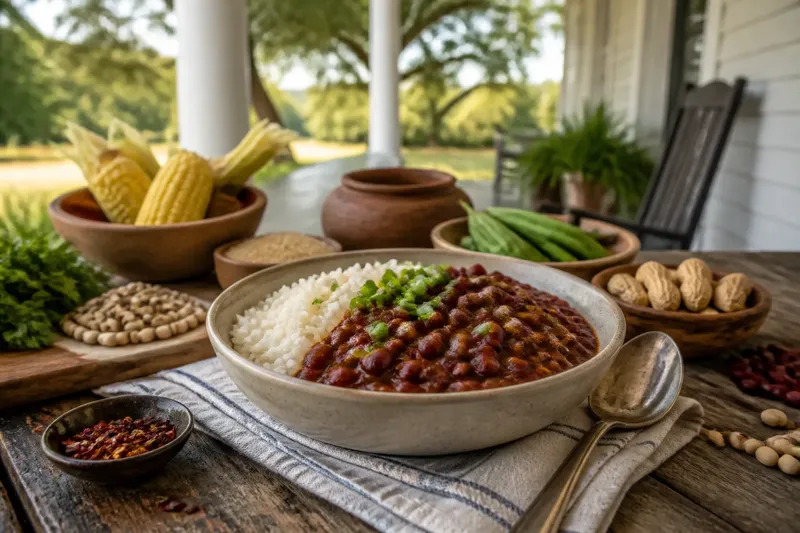
Cast Iron or Enameled Pot for a Long Simmer?
Cast iron or enameled pot for a long simmer? Compare acidity, lifting, seasoning, and cleanup to choose a pot that fits your recipes and routine.
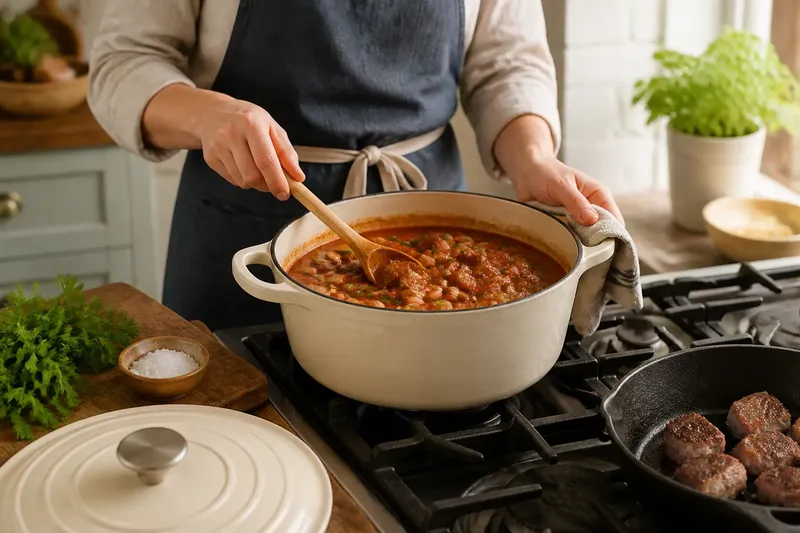
You lift a pot of beans from the stove and feel its weight before you see what is inside. Choosing cast iron or an enameled pot for a long simmer comes down to how your recipe treats the cooking surface, how comfortably you can handle the pot, and what care you want afterward.
Plain cast iron has a seasoned surface that changes with use. Enameled cast iron covers the iron with a glasslike coating, so it does not depend on seasoning. Both can suit a covered simmer, but their differences show up in acidic recipes, cleanup, and storage.
What does your recipe ask the pot to do?
Start with the food, not a regional story about what a cook is supposed to own. Red beans, a braise, tomato-rich sauce, and stew with browned meat may all simmer for a long time, but their ingredients and cooking sequences put different demands on the pot.
Plain cast iron suits cooks who value a durable, dark surface and are willing to maintain its seasoning. It can move from browning to a covered simmer without changing vessels. The seasoning is not a permanent, hard coating; acidic ingredients and rough handling can affect it, especially when the layer is thin or uneven.
Enameled cast iron offers an interior that does not depend on seasoning. It is a convenient choice for recipes with tomatoes, wine, citrus, or other acidic ingredients, and for cooks who prefer not to manage an oil-treated surface. Enamel can stain or collect cooked-on residue, but it does not need the same seasoning routine as bare iron.
Read the recipe’s sequence. If it begins with browning onions or meat and then adds liquid, either type may work. If the cooking liquid is notably acidic, enamel is often the more straightforward surface. For beans, broth, or a less acidic stew, plain iron may suit the job if its seasoning is in good condition.
How much weight can you handle comfortably?
A pot’s weight matters throughout the meal, not just when you take it down from a shelf. You may need to move it between burners, lift it to pour, or carry it to the table. The lid adds weight, and a full pot is harder to handle than an empty one. Handles that feel comfortable in the store may be less so when the pot is hot and filled with food.
If possible, pick up the actual pot by both handles. Check whether your fingers fit without strain, and consider how you would lift it with oven mitts. If grip strength, shelf height, or sink space makes a large vessel awkward, a smaller pot or lighter cookware may be more useful. The shape and handle design matter as much as the material.
Plain cast iron designs may feel compact, while some enameled models have broad handles and a heavy lid. Designs vary, so the material alone cannot tell you how manageable a particular pot will be. Check the maker’s care directions and heat limits before using it.
What kind of cooking surface suits your routine?
Plain cast iron develops seasoning from layers of cooking oil that have bonded to the iron. Keep it reasonably clean and dry, and avoid leaving wet or acidic food sitting in it. If the seasoning becomes patchy, the pot may need renewed care before it performs as you expect.
Enamel is a smooth, coated surface. It avoids the seasoning question and is less reactive with acidic foods, but it is not indestructible. Metal utensils, hard impacts, and abrupt temperature changes can harm some coatings. A chipped cooking surface can expose the iron beneath, so inspect the pot and follow the manufacturer’s guidance about continued use.
Consider how you stir. A wooden spoon or silicone spatula is gentle on either pot and especially kind to enamel. If you scrape browned bits from the bottom, use a utensil suited to the surface. For fond, a splash of liquid and a wooden spoon can loosen browned residue without aggressive scraping.
Say you are making tomato-and-bean stew and want to leave the leftovers in the same pot until the next day. With an enameled pot, the acidic sauce is compatible with its usual surface care, but the food still belongs in a storage container once it has cooled appropriately. With plain cast iron, the cook could instead simmer in another vessel or transfer the stew promptly, then clean and dry the iron. The practical difference is how much attention the surface asks of you after cooking.
How will you clean and store it?
Think about cleanup before choosing a pot for a dish that leaves a sticky ring. Plain cast iron is generally cleaned without a long soak, then dried promptly. Depending on the seasoning and the maker’s advice, a thin coat of cooking oil may be useful after drying. Leaving water in the pot or storing it damp invites rust.
Enameled cast iron usually allows ordinary washing with dish soap and a nonabrasive sponge. For stuck-on food, warm water can soften residue; avoid steel wool or harsh scrubbing that may mark the finish. A stain is not automatically damage. Follow the care instructions for the particular pot rather than assuming every coating responds the same way.
Dry either pot fully before putting it away. If you stack cookware, place a soft barrier between pieces to reduce scuffs and chips. Plain iron needs protection from damp storage; enamel needs protection from knocks.
Which pot suits your long-simmer routine?
Use these observations to make the choice specific to your kitchen:
- Acid in the recipe: If tomatoes, wine, or citrus make up much of the cooking liquid, choose enamel; otherwise, plain iron is an option if its seasoning is sound, or use another suitable vessel for an acidic simmer.
- Food left after cooking: If you tend to leave leftovers in the pot, transfer them to a storage container after cooking; if you can do that promptly, either surface can suit the meal.
- Full-pot lifting: If you can grip and move the filled pot securely with oven mitts, its size may suit you; if not, choose a smaller pot or lighter vessel.
- Seasoning care: If you are willing to dry and maintain an oil-treated surface, plain iron remains an option; if not, choose enamel.
- Cleanup habits: If you prefer a nonabrasive sponge and ordinary dish soap, enamel may fit; if you can avoid soaking and dry the pot promptly, plain iron may work well.
- Storage conditions: If your storage space is damp, dry plain iron carefully before putting it away; if you are concerned about knocks, protect enamel with a soft barrier or choose a storage spot where it will not be bumped.
Imagine a cook whose recipe starts with browned meat, then simmers in a tomato-rich sauce. The cook’s hypothetical starting point is a sound, seasoned plain-iron pot, a heavy enameled pot, and a preference for leaving leftovers in the cooking vessel. First, the recipe’s acidity points toward enamel for the simmer, while the preference for keeping food in the pot points toward using a separate storage container either way. Next, the cook lifts both empty pots by their handles with oven mitts and finds the enameled one awkward to manage. The resulting choice is to brown in the lighter plain-iron pot, transfer the ingredients to a more manageable enameled vessel for the acidic simmer if available, and move leftovers to a container; if no enameled pot can be handled comfortably, the alternative is to simmer the sauce in another suitable vessel. The tradeoff is an extra transfer in exchange for a surface better suited to the sauce and a safer lift.
Which pot questions help settle the choice?
Is enameled cast iron better for tomato sauce?
Its coated interior is generally convenient for acidic sauce because it does not rely on seasoning. Check the pot’s care instructions, and transfer cooked food to a storage container rather than leaving it in the pot for an extended period.
Can plain cast iron handle a long simmer?
It can, especially with less acidic foods and sound seasoning. Long contact with acidic liquid may affect the seasoning, so consider the recipe and the condition of the surface.
Does enamel need seasoning?
No seasoning layer is required for the enamel itself. Wash and dry the pot according to its instructions, and protect the coating from hard impacts and abrasive tools.
Can I use the same pot for browning and simmering?
Both types can often brown ingredients before liquid is added, then continue into a simmer. Use moderate heat and suitable utensils, and check the manufacturer’s directions for burner and oven use.
When choosing cast iron or an enameled pot for a long simmer, let the repeated parts of your routine decide: lifting, stirring, handling acidic ingredients, and cleaning afterward. The better fit is the pot you can move comfortably, match to the food, and care for consistently.