Why Southern Porches Face the Street
Why Southern porches face the street: learn how shade, privacy, and daily routines shape a porch that welcomes neighbors without sacrificing comfort.
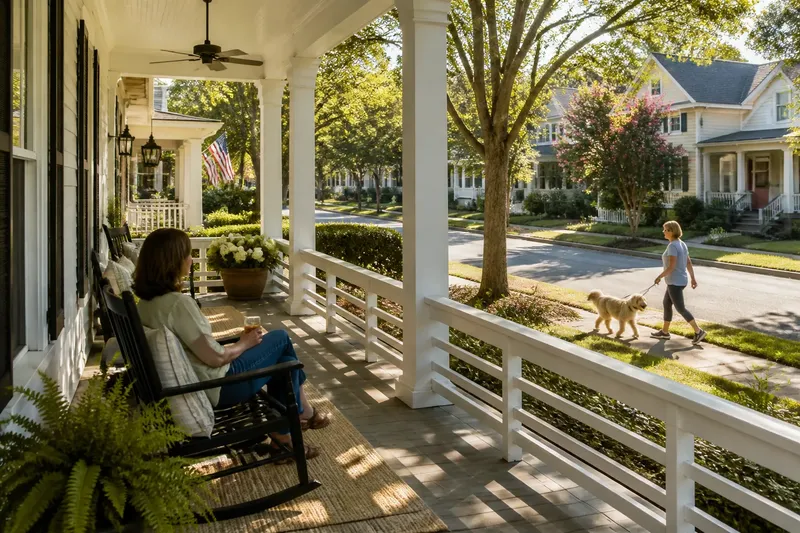
A neighbor passes with a dog as someone settles into a porch chair. The porch faces the street, but the moment feels either sociable or exposed depending on the shade, the view, and where the chair sits. Why Southern porches face the street is partly a question of how a house meets its neighborhood, and partly a question of whether that connection suits the people who live there.
Why does the porch meet the street?
A street-facing porch gives residents a place to notice arrivals, greet passersby, and keep an eye on the life outside the house. It also makes the entrance easier to recognize: visitors can find the front door without circling the building. In older neighborhoods, porches often sit near sidewalks and front yards, where a wave or short conversation can happen without anyone formally entering the home.
This arrangement is not a rule of Southern architecture. Lot shape, street direction, weather, topography, and neighboring buildings all affect where a porch makes sense. Some houses turn toward a side yard, a shared lane, or a view. The useful question is what kind of relationship the household wants between indoor life and passing movement.
What if afternoon sun makes the porch uncomfortable?
A west-facing porch may receive strong late-day sun, just when people are ready to sit outside. A roof shades the space overhead, but low-angle light can still reach chairs and the doorway. Pale paving and nearby walls may reflect heat. The porch can look inviting in the morning and go unused later.
Notice when the uncomfortable light arrives and which part of the porch it reaches. Then consider changes that preserve airflow and the view: an overhang where the structure allows it, exterior shades, a trellis with suitable plants, or movable seating in a naturally shaded corner. Trees can help, but their mature size and placement matter; a young tree will not shade the porch right away, and roots or branches may conflict with paths and buildings.
Say a household has a west-facing porch where the front chairs become uncomfortable in late afternoon. They move the chairs toward the east end, add a retractable exterior shade, and observe whether that spot stays more comfortable while keeping a view of the walk. If the shade blocks a breeze or darkens the entry, they can adjust it or use it only during the harshest light.
How can a street-facing porch feel too exposed?
Passing foot traffic can make a porch feel public even though it belongs to the house. The cause is often a direct line of sight between the sidewalk and the seating, rather than street orientation alone. A low front yard, a brightly lit porch at night, or chairs set squarely toward the sidewalk can intensify that feeling.
Try angling the chairs, placing a small table or planter to soften the view, or screening only the seating area. A lattice panel, slatted screen, or leafy container can provide partial privacy while keeping the entrance visible. A dense barrier across the whole frontage may make a welcoming porch feel closed off, so choose screening to suit the household’s habits.
Lighting also changes the balance. A bright ceiling fixture can make people conspicuous after dark, while a shielded, modest light near the door can help visitors see where to go without illuminating every seat. Fixture placement and permitted changes depend on the home and local requirements; check applicable instructions or rules before altering them.
How can you bring the porch into daily life?
A street-facing porch can still feel unused if it is awkward to reach, lacks a comfortable seat, or is separated from the path by difficult steps and landscaping. Sometimes the front door opens onto a narrow landing with no room to pause. In other cases, chairs face the wall, leaving residents little view of the yard or street.
Look at the approach as a visitor would. Is the path easy to recognize? Can someone pause without blocking the door? Does a chair have a useful view, and is there a small surface for a drink or keys? Rearranging furniture may help more than adding decoration. A bench beside the entrance can suit a narrow porch; two angled chairs work better where there is room to talk.
How should you choose a porch orientation?
Check these conditions before treating a street-facing porch as the default. Each observation points to a practical choice.
- Sun: Observe which seats receive direct light during the hours the porch is used. If glare reaches the preferred seats, then add adjustable shade or move them; otherwise, keep the open view and avoid unnecessary screening.
- Movement: Watch where pedestrians, deliveries, and visitors approach. If furniture narrows that route, then reposition it; otherwise, keep the existing arrangement and preserve the clear path.
- Privacy: Check sightlines from the sidewalk and nearby windows. If a seat is directly exposed, then angle it or add a partial screen; otherwise, leave the frontage open rather than blocking it without need.
- Air and outlook: Notice where a breeze enters and which views matter. If a proposed barrier would block either, then choose a more open screen or relocate seating; otherwise, consider screening the specific area that needs it.
- Household routine: Decide whether the porch is for greeting neighbors, quiet sitting, watching children play, or sheltering the front door. If the main activity needs privacy, then favor a side-facing seat or a side porch; otherwise, orient the seating toward the street.
- Entry access: Check whether someone can reach the door and pause without colliding with furniture. If the approach feels cramped, then move or reduce the furniture; otherwise, retain the arrangement that makes the entrance easy to use.
Imagine a household with a west-facing porch, a sidewalk close to the front yard, and a narrow entry path. They notice that late sun falls on the two chairs, pedestrians can see directly into the seating area, and a planter would narrow the route to the door. They move one chair to the shaded side, angle the other toward the yard, and leave the path clear. The resulting tradeoff is deliberate: the porch keeps a view of the street and an easy entrance, while its seating feels less exposed and avoids the worst glare. If the shaded side loses the breeze, they can favor the more open chair position instead of adding a screen.
These observations may point toward a street-facing porch, a side porch, or a small entrance stoop with a more private sitting area elsewhere. A side porch can still support neighborhood contact if the path and entrance remain clear. A street-facing porch can also offer retreat when its chairs turn slightly away from the sidewalk and its shade suits the house.
What should you consider before changing the porch?
Start with the porch’s actual use rather than an image of how a Southern house is supposed to look. A selective screen can protect a seated person while leaving the door and approach easy to recognize. A south-facing porch does not automatically stay cool; roof depth, nearby trees, reflected heat, and seasonal sun all affect comfort. Observe conditions at different times before choosing shade or screening.
Can a porch be private and still feel welcoming?
Yes, if screening is selective rather than complete. A planter or partial screen can shield a seat while leaving the door and approach easy to recognize.
Does a south-facing porch always stay cool?
No; roof depth, nearby trees, reflected heat, and seasonal sun all affect comfort. Observe the porch at different times before deciding what shade it needs.
Should the chairs face the street?
Only if seeing passersby is part of the porch’s purpose. Angled chairs can make conversation easier and reduce the feeling of sitting on display.
Is a side-facing porch a less Southern choice?
No. The orientation should fit the lot, climate, entry route, and household routine, not an image of how a regional house is supposed to look.
Why Southern porches face the street has no single answer. The arrangement can offer shade, a clear entrance, and a place for ordinary greetings, but it can also bring glare or unwanted exposure. Treat orientation as one part of the design, then adjust seating, screening, and shade to the conditions around the actual house. A useful porch lets residents choose when to join the street and when to turn their attention elsewhere.